Showing posts sorted by relevance for query smart. Sort by date Show all posts

11 April 2023

Another reason that smart devices suck: short product life! More tech kit in landfill...

In a very quiet reveal, Google says it has stopped updating third-party Lenovo, JBL, and LG Smart Displays. The writing has been on the wall for quite some time for this form factor, but it’s still surprising.

The Google support article on how to “Make Duo calls on your speakers & Smart Display” recently added this “Important” notice:

Important: Google no longer provides software updates for these third-party Smart Displays: Lenovo Smart Display (7″, 8″ & 10″), JBL Link View and LG Xboom AI ThinQ WK9 Smart Display. This could impact the quality of video calls and meetings.

Google first announced Assistant Smart Displays in January of 2018 at CES. The LG ThinQ WK9, Lenovo Smart Display 8/10, and JBL Link View went on sale later that year. The last third-party Smart Display was a 7-inch model from Lenovo in late 2019. 

Meanwhile, in other news: Owners of Dropcam security cameras and Nest Secure systems have been given an unwelcome deadline from Google: their smart home products will be shut off April 8 next year.

www.9to5google.com


29 January 2020

Smart motorways scandal: Highways Agency facing police probe over deaths of stranded drivers


Highways England is facing a police investigation over the deaths of motorists on smart motorways after ministers claimed safety warnings had been repeatedly ignored.

The widow of a driver killed on a smart motorway made formal allegations of criminal corporate manslaughter against the roads agency on Monday, the Telegraph can disclose.

It comes as a damning report by a group of MPs finds on Tuesday that the “shocking and careless” introduction of the scheme has cost lives.

Meanwhile a series of transport ministers told the Telegraph they had repeatedly warned Highways England officials that smart motorways posed a danger to drivers. One former roads minister said he had been “completely misled”.

This whole concept of "Smart Motorways" is horrific. It's a way of squeezing more traffic onto the existing roads - with no care for the health & safety of road users. Should you be unlucky enough to break down - you are relying on other road users observing that the lane is closed off & that your vehicle is there. I can assure you - as a motorcyclist - that many road users have no idea what is going on! Thirty-eight people have been killed on smart motorways in the last five years. It's time to stop this "Smart Motorway" madness ASAP - before more people are needlessly killed or injured.


13 July 2022

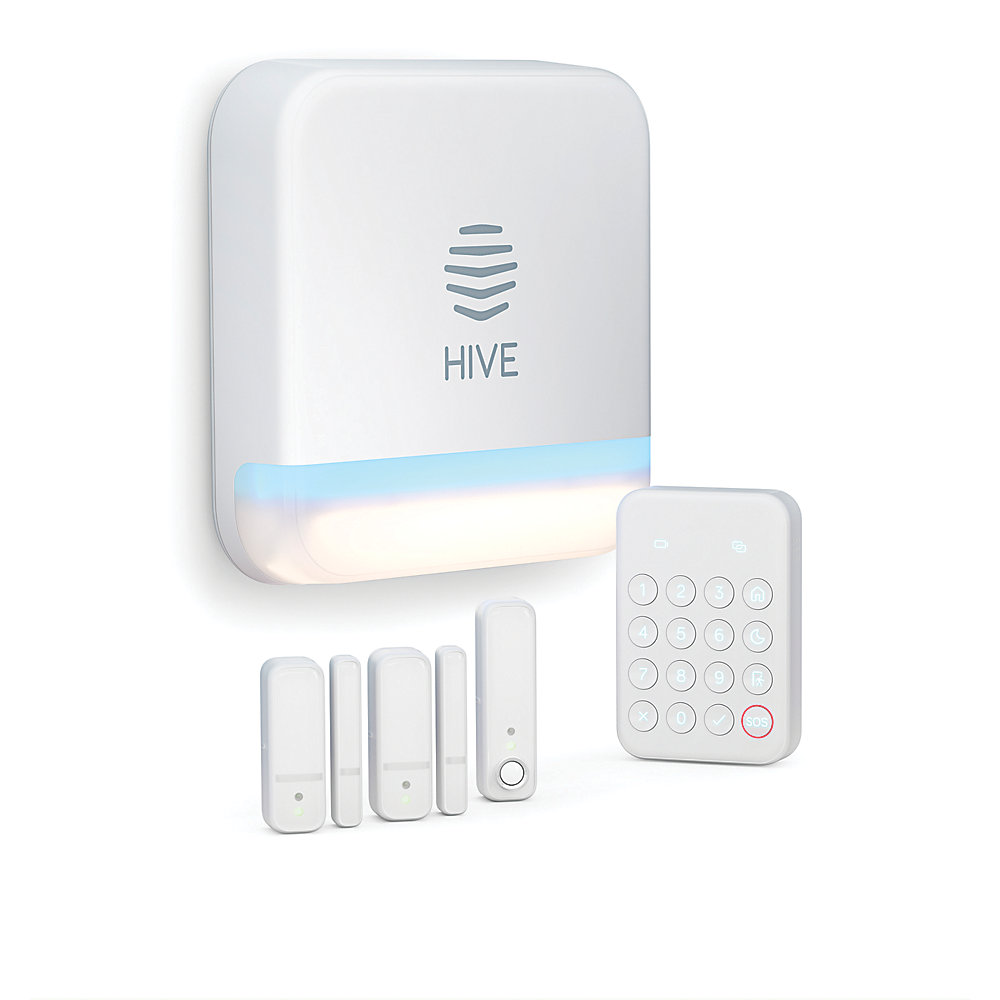
Hive to pull the plug on smart home gadgets by 2025

Home automation platform Hive plans to terminate key products in its line, including the Hive View cameras, HomeShield, and Leak products.

A Hive spokesperson told The Register: "At Hive, we've got big plans to make... homes greener, so we've made the tough decision to discontinue our smart security and leak detection products. As a smart tech brand in the middle of a climate crisis, we know the focus needs to change and will instead be developing smart home tech that'll help get us closer to achieving Net Zero."

Users, some of whom have invested four-figure sums in Hive products, are less than impressed.

The indoor and outdoor cameras and HomeShield will be supported until August 1, 2025. The Leak sensors will work as normal until September 1, 2023, after which leak notifications and water usage graphs will dry up.

Once that August date is reached, the cameras will no longer function. Video playback subscriptions will last for "a minimum of two years."

Older security products also face the axe, including the Sound Detection service for the Hub 360, which will be killed off at the end of this year. More up to date is the Boiler IQ trial, which is also on the chopping block. The explanation: "Hive has taken a business decision to not move forward with this product – and to focus on other areas of innovation instead."

"Smart" devices - great eh? Used to be that you bought a product & that was that. Nowadays, you buy the device, pay a subscription for services, & when the company abandons the product - you end up with a dodo. Not just gadgets though: how about Zero Motorcycles, Tesla & BMW cars. NB: these "upgrades" are to switch on an option that is already in the vehicle. If it can be switched on remotely, it can also be switched off remotely. Not so "smart" if you ask me...

www.theregister.com


18 April 2023

New smart motorway plans scrapped

The UK Government has announced it is to scrap plans to build more smart motorways over cost and safety concerns. “All drivers deserve to have confidence in the roads they use to get around the country,” Prime Minister, Rishi Sunak said. “That’s why last year I pledged to stop the building of all new smart motorways, and today I’m making good on that promise.”

Around 10% of the UK motorway network is made up of smart motorways, carriageways that deploy various methods to manage the flow of traffic, such as allowing motorists to use the hard shoulder as an extra lane and variable speed limits.

However, the lack of a hard shoulder has led to fatal collisions, with motoring agencies, including the RAC, actively campaigning for their use to be reassessed.

RAC road safety spokesman Simon Williams said: “This is a watershed announcement and a victory for everyone who has campaigned against these motorways that, by their design, put drivers in more danger should they be unlucky enough to break down on one. 

“Our research shows all lane running smart motorways are deeply unpopular with drivers, so we’re pleased the Government has finally arrived at the same conclusion. It’s now vitally important that plans are made for making the hundreds of existing miles of these types of motorway as safe as possible.

“The possibility of converting all lane running stretches to the ‘dynamic hard shoulder’ configuration, where the hard shoulder is open and closed depending on the levels of traffic, could be one option the Government considers.”

Between 2015 and 2019, 36 people died on UK smart motorways where there is no hard shoulder or the hard shoulder can be converted to an extra lane, according to figures from National Highways, which operates England’s motorways and A-roads.

www.motorcyclenews.com


08 June 2020

Smart home devices - just say no!


Over the past decade, an increasing number of appliances have offered internet connectivity, allowing users to remotely control them via a mobile device, or engineers to remotely diagnose problems. Some devices like Samsung's Smart Fridge Freezers include large touchscreen displays, allowing users to do tasks that would otherwise be performed on a smartphone or computer.

These devices are, obviously, vastly more expensive. A smart fridge typically costs £855 more than one without a Wi-Fi chip whirring inside. Smart dishwashers are £259 more on average, while smart tumble driers (don't laugh, they're a thing) command a premium of £190.

For consumers, that ambiguous (if not outright short) lifespan raises the possibility they could be forced to replace their expensive white goods before they otherwise would. According to the consumer watchdog, fridge-freezers typically last 11 years.

If a manufacturer decides to withdraw software support, or switch off central servers, users could find themselves with a big, frosty brick in their kitchen.


05 February 2020

More dumb "smart devices" - hackable lightbulbs that could compromise your entire network!


Check Point Research, the Threat Intelligence arm of Check Point® Software Technologies Ltd. a leading provider of cyber security solutions globally, has today revealed vulnerabilities that would enable a hacker to deliver ransomware or other malware to business and home networks by taking over smart lightbulbs and their controller.

Check Point’s researchers showed how a threat actor could exploit an IoT network (smart lightbulbs and their control bridge) to launch attacks on conventional computer networks in homes, businesses or even smart cities.  Researchers focused on the market-leading Philips Hue smart bulbs and bridge, and found vulnerabilities (CVE-2020-6007) that enabled them to infiltrate networks using a remote exploit in the ZigBee low-power wireless protocol that is used to control a wide range of IoT devices.


04 August 2017

Deal of the Day: LG 43" Smart TV - under £400!


LG 43LJ624V - 43" Full HD Smart TV

Full HD
Smart TV
webOS 3.5
HDMI x3
Picture Mastering Engine

LG Smart TV with webOS: The award winning LG Smart TV with Freeview Play : Enjoy catch-up TV from BBC iPlayer, ITV Hub, All 4 and Demand5, as well as movies and box sets on demand from Netflix, Amazon Video and NOW TV.

Was: £449.96
Offer Price: £399.99
Save £49.97


08 January 2020

SONOS fed up with "me-too" ripoff smart speakers: see you in court Google!


Sonos has decided to take on Google, suing the monster tech company for allegedly infringing on its sound-sharing patents, and throwing itself into what will almost certainly be a brutal and very expensive legal battle.

Sonos was once the leader for smart home speakers though in recent years the market has been swamped by the three big tech giants – Apple, Amazon, and Google – and their own flavor of cheaper smart speakers. The latter two companies are knowingly infringing its many patents, Sonos claims.

“Google is an important partner with whom we have collaborated successfully for years, including bringing the Google Assistant to the Sonos platform last year," Sonos CEO Patrick Spence told The Register in a statement on Tuesday. "However, Google has been blatantly and knowingly copying our patented technology in creating its audio products.

"Despite our repeated and extensive efforts over the last few years, Google has not shown any willingness to work with us on a mutually beneficial solution. We’re left with no choice but to litigate in the interest of protecting our inventions, our customers, and the spirit of innovation that’s defined Sonos from the beginning.”

Spence told the New York Times it is suing only Google – as opposed to both Google and Amazon – because it wants to focus its resources. It also has a stronger case against Google, given that it worked closely with ad-slinging giant back in 2013 to tightly integrate Google Play with its products: a move that Sonos now calls “naive.”

According to Sonos, it has repeatedly warned Google and Amazon that they are infringing its patents but neither company has agreed to license its technology. It’s not entirely clear what finally sparked Sonos to sue, but the fact that both companies are now outselling Sonos in the smart speaker market will be a big part of it.


17 August 2021

Sonos gets early patent victory against Google smart speakers

Sonos scored an early victory in its case against Google Friday, when the US International Trade Commission ruled that Google infringed five of Sonos' smart speaker patents. The ruling is preliminary and subject to a full ITC review, but it could lead to a ban on Google smart speakers.

In January 2020, Sonos brought a patent infringement case against Google targeting Google's smart speakers, the Google Home, and later the Nest Audio line. Sonos is the originator of Internet-connected speakers that easily hook up to streaming services, while Google speakers combine a similar feature set with voice-activated Google Assistant commands. To hear Sonos tell the story, Google got a behind-the-scenes look at Sonos' hardware in 2013, when Google agreed to build Google Play Music support for Sonos speakers. Sonos claims Google used that access to "blatantly and knowingly" copy Sonos' audio features for the Google Home speaker, which launched in 2016.

However you want to measure it, Sonos is a tiny company compared to the tech giants it regularly battles. The 19-year-old company only has products in the connected speaker market, and it has a $5 billion market cap. Its competitors—Google, Amazon, and Apple—are some of the world's biggest companies, each with a market cap above $1.5 trillion. To make matters more complicated for Sonos, the company relies on both Google and Amazon to do business in search, advertising, and retail sales, and it worried about retaliation from the two giants. Plus, once Amazon and Google entered the market, Sonos was forced to adopt support for both voice assistants in order to compete. Back in 2020, Sonos said Amazon also seemed to be using its technology, but it would focus its legal efforts on Google.

www.arstechnica.com


17 June 2018

Another smart device fail: a padlock - would you believe it?!?


It's never easy to crack into a market with an innovative new product but makers of the "world's first smart fingerprint padlock" have made one critical error: they forgot about the existence of screwdrivers.

Tapplock raised $320,000 in 2016 for their product that would allow you to use just your finger to open the "unbreakable" lock. Amazing. Things took a turn for the worse when the ship date of September came and went, and backers complained that the upstart has stopped posting any updates and wasn't responding to emails nor social media posts.

But after months of silence, the startup assured El Reg that everything was still moving forward and the delays were due to "issues with manufacturing in China."

Fast forward 18 months and finally – finally – the $100 Tapplock is out on the market and it is… well, how do we put this kindly? Somewhat flawed.

No less than three major problems with the lock have been discovered that make it less than useless because presumably people intend to use the lock to secure valuable things.

Smart devices are often horribly dumb. Have a look at this video - spoiler: the scary stuff starts at 3mins 30secs - dismantled with a sticky pad & screwdriver! Pathetic for a $100 security device! Donline tip: If you can achieve what you need to using a quality "traditional" device - just do it!


23 December 2020

Looking for a new Telly? Better read this: DHS Looking Into Cyber Risk from TCL Smart TVs

The acting head of the U.S. Department of Homeland Security said the agency was assessing the cyber risk of smart TVs sold by the Chinese electronics giant TCL, following reports last month in The Security Ledger and elsewhere that the devices may give the company “back door” access to deployed sets.

Speaking at The Heritage Foundation, a conservative think tank, Acting DHS Secretary Chad Wolf said that DHS is “reviewing entities such as the Chinese manufacturer TCL.”

“This year it was discovered that TCL incorporated backdoors into all of its TV sets exposing users to cyber breaches and data exfiltration. TCL also receives CCP state support to compete in the global electronics market, which has propelled it to the third largest television manufacturer in the world,” Wolf said, according to a version of prepared remarks published by DHS. His talk was entitled “Homeland Security and the China Challenge.”

Our LG 42" TV recently went on the blink - the backlight packed up, but otherwise was working fine. LG wanted £329 to repair a 6 year old telly! I have today just ordered a replacement from the brilliant Richer Sounds for - wait for it - the same £329, with a 6 year warranty! 

Caveat emptor: Smart TVs connect to your network. In IT there is a saying, "if you have physical access to something, you own it". Now imagine a dodgy Chinese TV sitting attached to your network - what could possibly go wrong?... With any IT device - you are always best off sticking to reputable vendors than some cheap "Harry Nibble" brand.

www.securityledger.com


04 February 2021

Highways England’s smart motorways rollout 'entirely wrong' and drivers don’t know how to use them

Highways England’s rollout of smart motorways was “entirely wrong” and drivers still don’t know how to use them, the Transport Secretary has said.

Grant Shapps said he was surprised to learn the Government-owned company in charge of the rollout failed to have the technology in place to spot stranded motorists in live lanes.

Mr Shapps also suggested motorists had no idea what to do if they broke down in live lanes as they simply "sprung up" without a major information campaign.

Appearing in front of MPs on the transport committee on Wednesday, the cabinet minister said he had ordered the scrapping of dynamic hard shoulders, where they could be switched to “live lanes” if traffic grew heavy, describing them as "insane" and adding to motorists' confusion.

Mr Shapps comments are the most damning indictment yet on the smart motorway rollout by a serving Government minister, and comes after The Telegraph has revealed how people are dying after failing to reach “emergency refuge areas” and being stranded in the inside live lane before being hit by other vehicles.

www.telegraph.co.uk


26 November 2021

Huge fines and a ban on default passwords in new UK law

The government has introduced new legislation to protect smart devices in people's homes from being hacked.

Recent research from consumer watchdog Which? suggested homes filled with smart devices could be exposed to more than 12,000 attacks in a single week.

Default passwords for internet-connected devices will be banned, and firms which do not comply will face huge fines.

One expert said that it was an important "first step".

Cyber-criminals are increasingly targeting products from phones and smart TVs, to home speakers and internet-connected dishwashers. Hackers who can access one vulnerable device can then go on to access entire home networks and steal personal data.

In 2017, for example, hackers stole data from a US casino via an internet-connected fish tank. There have also been reports of people accessing home webcams and speaking to family members.

And poor security on a home wi-fi router could have been behind the uploading of illegal child abuse images from a home network that led to police accusing an innocent couple of the crime.

www.bbc.co.uk


01 September 2020

Sena Smart Intercom Pairing - an easier wair to pair motorcycle helmet comms


Smart Intercom Pairing is here for quick and easy Bluetooth® pairing!

Sena is committed to the continued support for our diverse portfolio of products. Smart Intercom Pairing (SIP) allows for an easy way to connect using a smartphone to scan QR codes to quickly pair devices to one another. Nearly all Sena devices, along with many Sena-powered OEM devices, with Bluetooth 4.1 and up can use their respective app in order to quickly pair with other SIP compatible headsets. 

While many products already have access to SIP, the new feature will soon be rolling out for over 60 Sena and Sena-powered OEM devices. In addition to Sena branded devices, SIP will be supported by our partner products, which include Sena-powered communication devices by Harley-Davidson, Schuberth, Shoei, HJC, Polaris, Klim, Nexx, ICON, AGV, and more. Check out our latest blog post to learn more about SIP, and which app you can use in order to benefit from the new feature. #RideConnected


07 March 2018

Our homes are full of "smart devices", but who are they smart for?...


The UK government has announced guidelines to make internet-connected devices safer to use following a spate of security breaches.

It includes moves to make sure passwords are unique and not resettable to a factory default and that sensitive data transmitted via apps is encrypted.

But the guidelines are not binding, leading some to question how effective they will be.One expert said they would not stop "irresponsible" manufacturers.

Suddenly, everything is a computer. Phones, of course, and televisions. Also toasters and door locks, baby monitors and juicers, doorbells and gas grills. Even faucets. Even garden hoses. Even fidget spinners. Supposedly “smart” gadgets are everywhere, spreading the gospel of computation to everyday objects.

www.bbc.co.uk

06 June 2024

Yet another "Smart" gadget gets dumped by it's manufacturer!


As we’re currently seeing with AI, when a new technology becomes buzzy, companies will do almost anything to cram that tech into their products. Trends fade, however, and corporate priorities shift - resulting in bricked gadgets and buyer's remorse.

That’s what's happening to some who bought into Oral-B toothbrushes with Amazon Alexa built in. Oral-B released the Guide for $230 in August 2020 but bricked the ability to set up or reconfigure Alexa on the product this February. As of this writing, the Guide is still available through a third-party Amazon seller.

The Guide toothbrush's charging base was able to connect to the Internet and work like an Alexa speaker that you could speak to and from which Alexa could respond. Owners could “ask to play music, hear the news, check weather, control smart home devices, and even order more brush heads by saying, ‘Alexa, order Oral-B brush head replacements,'” per Procter & Gamble's 2020 announcement.

Oral-B also bragged at the time that, in partnering with Alexa, the Guide ushered in “the truly connected bathroom.”

On February 15, Oral-B bricked the Guide's ability to set up Alexa by discontinuing the Oral-B Connect app required to complete the process. Guide owners can still use the Oral-B App for other features; however, the ability to use the charging base like an Alexa smart speaker - a big draw in the product’s announcement and advertising - is seriously limited.

The device should still work with Alexa if users set it up before Oral-B shuttered Connect, but setting up a new Wi-Fi connection or re-establishing a lost one doesn't work without Connect.


29 April 2024

Smart gadgets: Tougher rules for sellers of internet connected devices in the UK


Manufacturers will have to follow stricter rules if they want to sell "smart" gadgets in the UK after a new law came into effect.

It is designed to ensure there is better security around devices such as baby monitors, televisions and speakers that are linked to the internet. These gadgets can pose a risk because cyber-criminals use them to hack into home networks and steal private data. The government said the new law should give consumers "peace of mind".

The risks have ballooned in recent years as our houses have filled with more and more web-linked smart devices - from games consoles to fitness trackers, doorbells and even dishwashers, also sometimes referred to as the "internet of things" (IoT).

Until now, manufacturers were expected to follow security guidelines, but the new law makes three new requirements:

  • that password procedures are more secure, including ensuring any set by the manufacturer are not left blank or using easy-to-guess choices like "12345" or "admin"
  • that there is clarity around how to report "bugs" or security problems that arise
  • that manufacturers and retailers inform customers how long they will receive support, including software updates, for the device they are buying

Failure to meet these minimum requirements, known as the Product Security and Telecommunications Infrastructure (PSTI) regime, can trigger fines.

www.bbc.co.uk


10 January 2020

Join in Everyday Faith via our app or on your smart speaker


The Church of England smart speaker skill enables millions of users to ask for prayers, explanations of the Christian faith, location-based information about local church events and services, and more.

To get started, just follow the instructions for your device below:
"Alexa, open the Church of England"
"Google, talk to the Church of England"

These smart speaker apps are integrated closely with A Church Near You to help you find out about services and events going on close to where you are throughout the year. 

The apps also seek to increase users' knowledge of the Christian faith 
by answering questions such as:


26 April 2018

New Sonos pricing on Amazon.co.uk: £10 off


What is Sonos? Sonos is the wireless Home Sound System that fills as many rooms as you want with great-sounding music, movies and TV. Stream via WiFi. Play whatever you’re craving. And amp up every moment with intense, pulse-pounding sound.

RRP: £149.00 
Price: £139.00

RRP: £199.00 
Price: £189.00


17 June 2019

When smart = dumb: your TV can get infected by a virus!


Nearly anything that connects to the internet can be hacked. And that includes Samsung's QLED TVs. 

In a tweet, Samsung US support account shared a video on Sunday outlining how users can scan their smart TVs for viruses. It is unclear what prompted the tweet or why the process seems to be opt-in as opposed to the operating system automatically scanning for viruses in the background.